
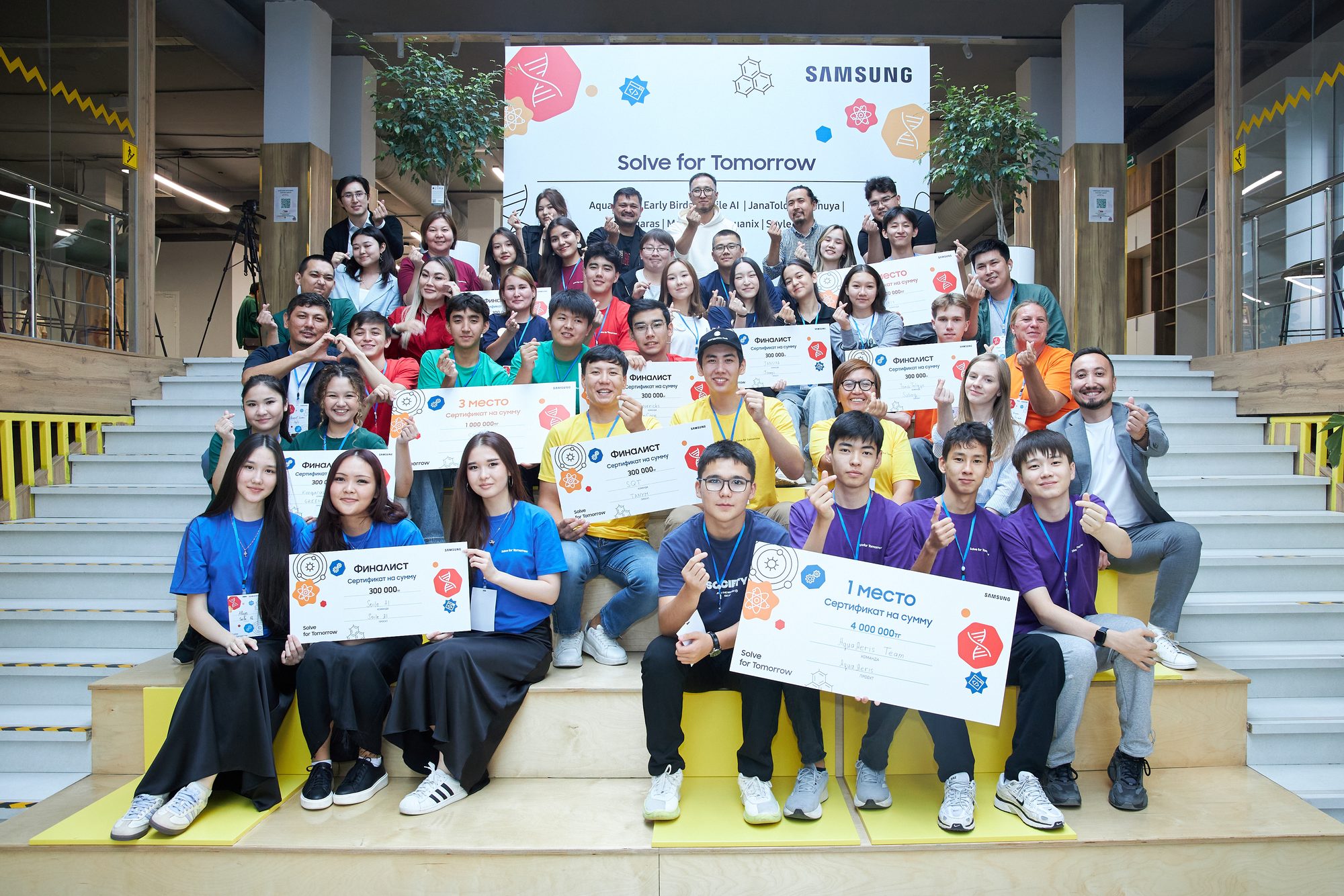
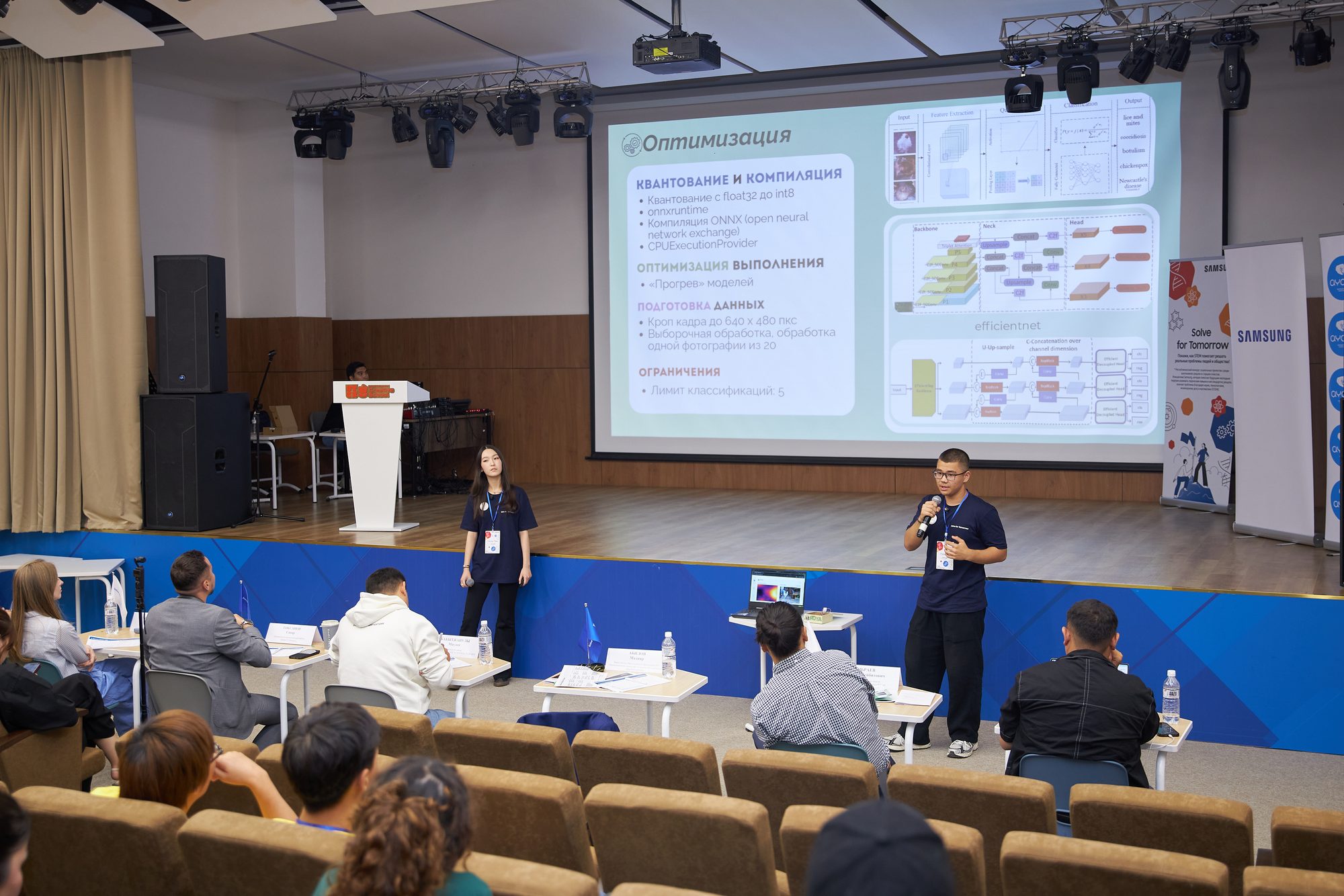
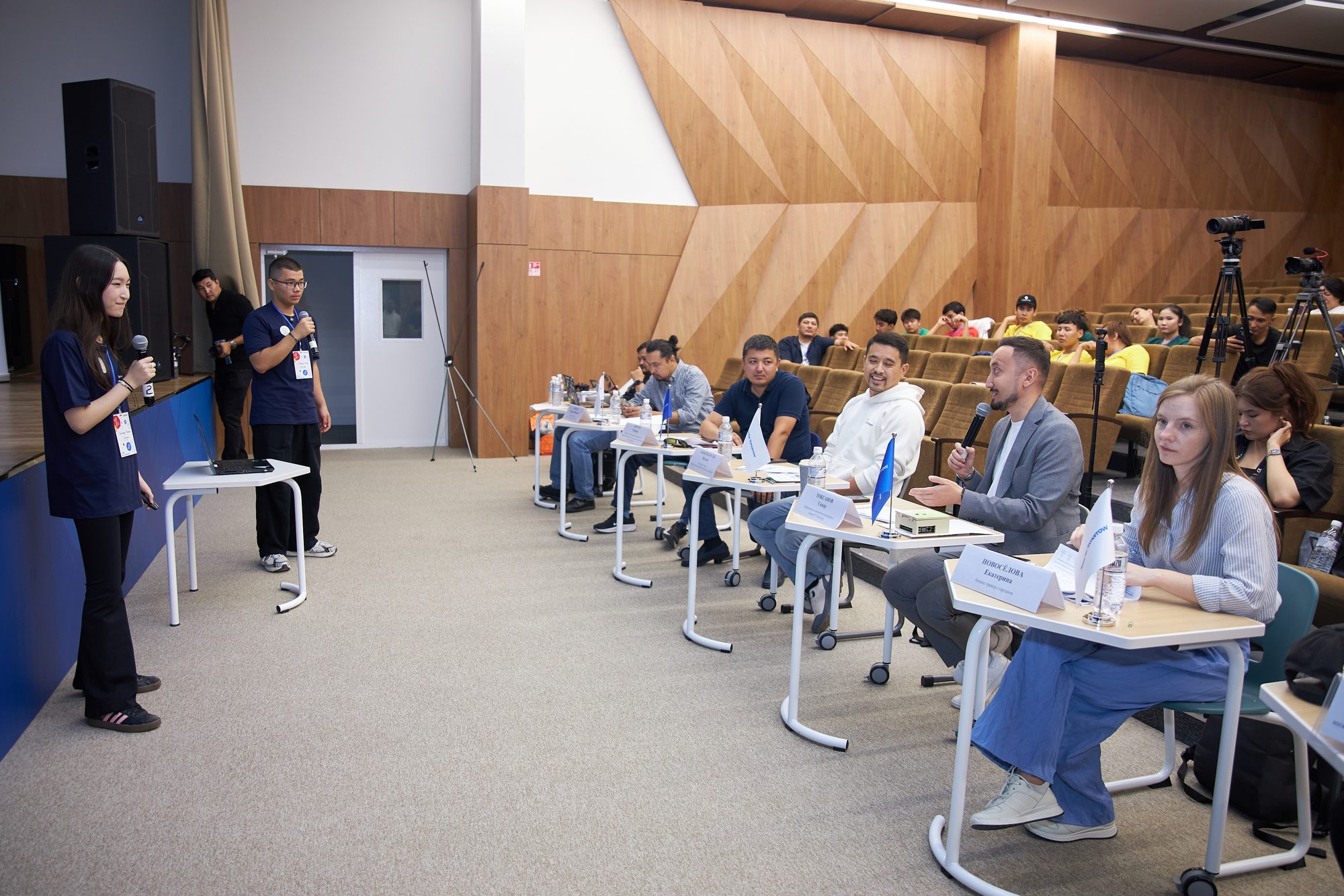
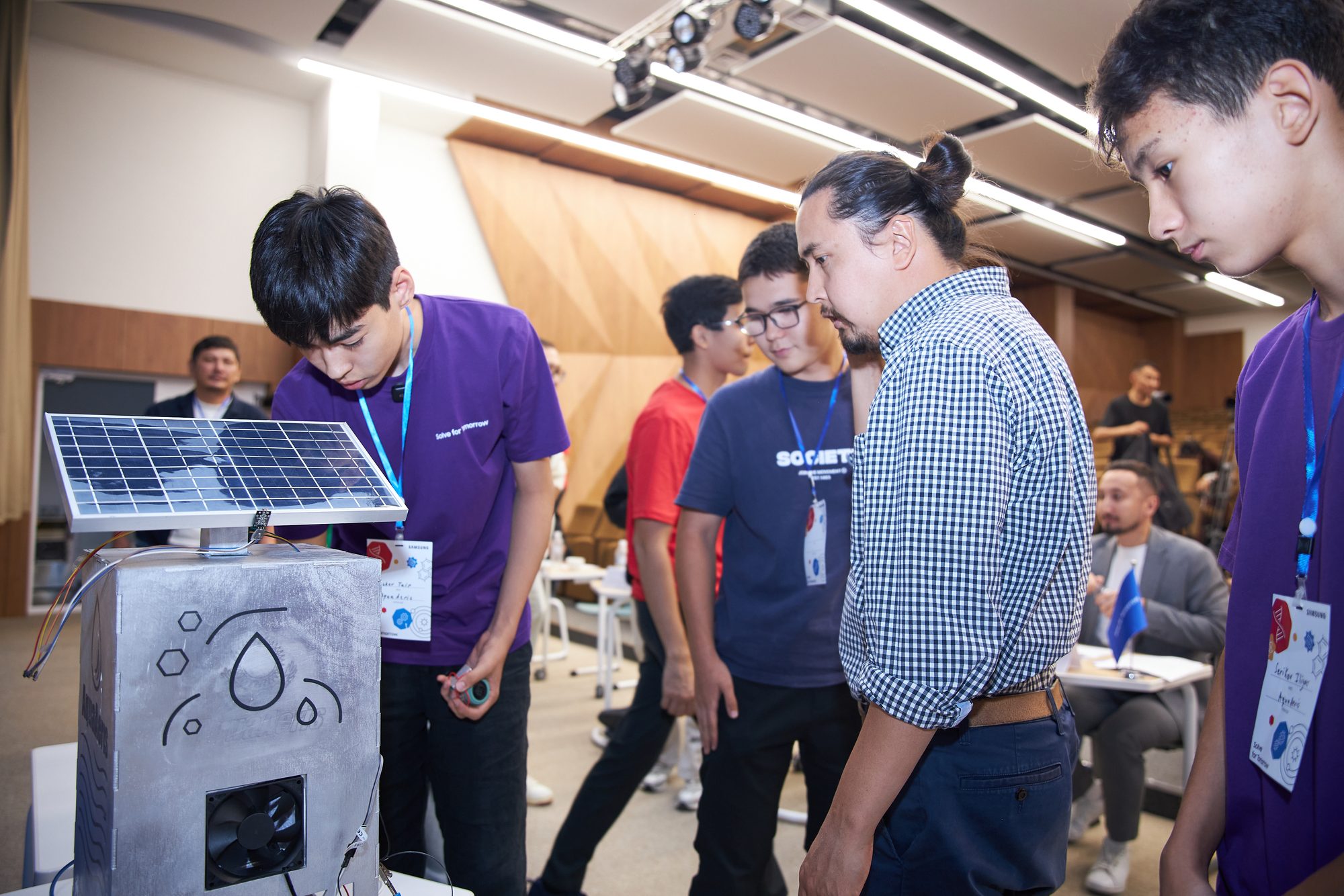
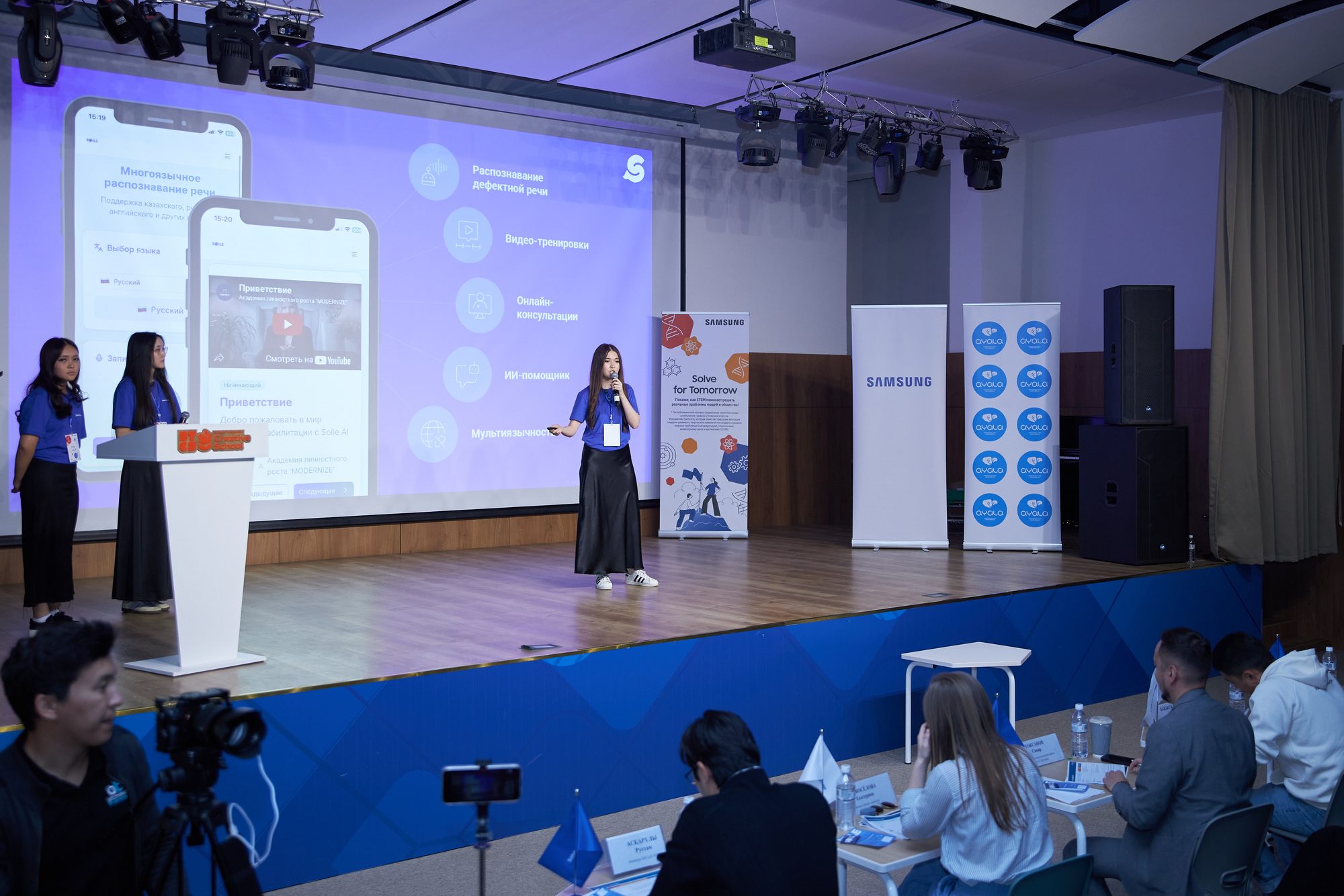
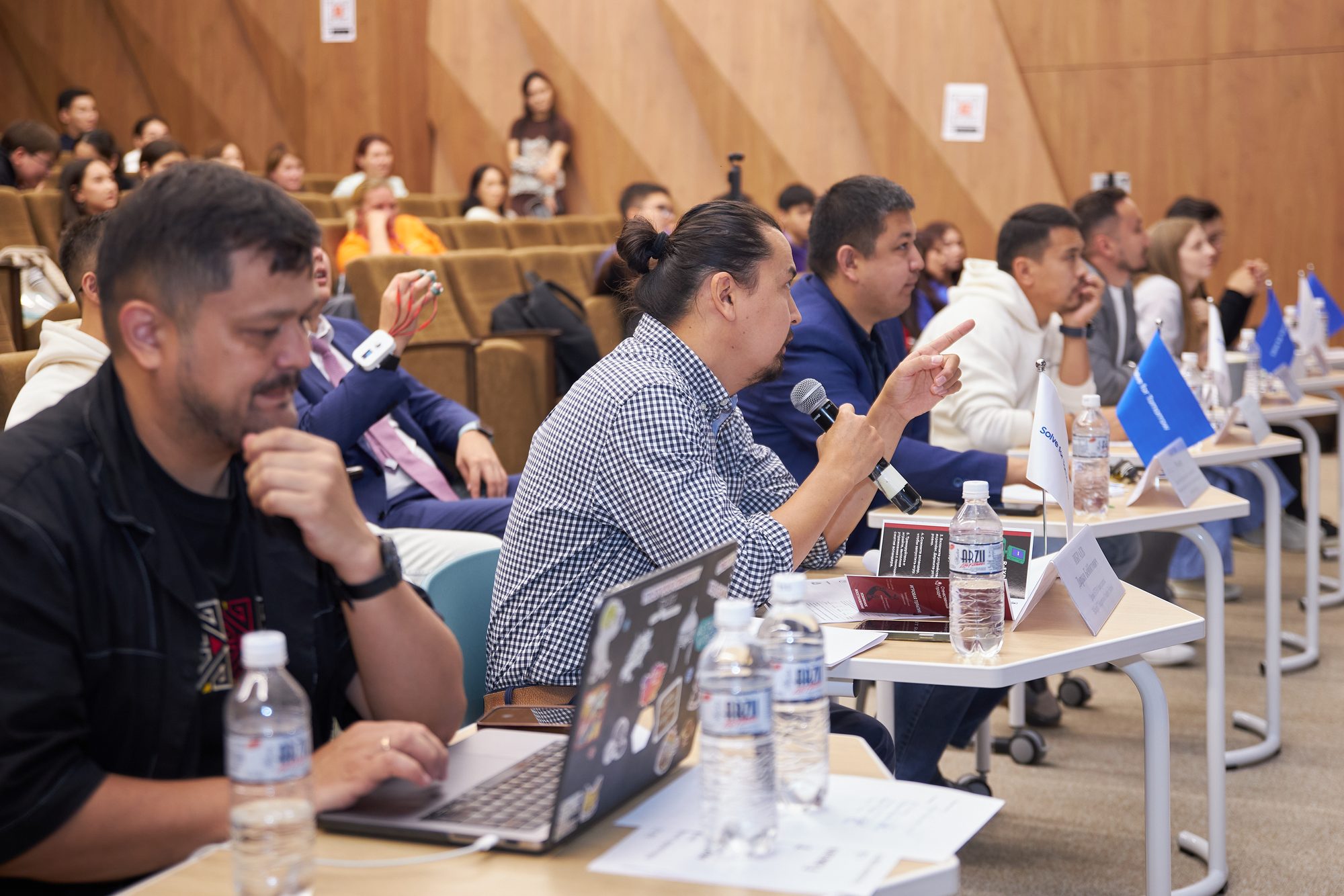
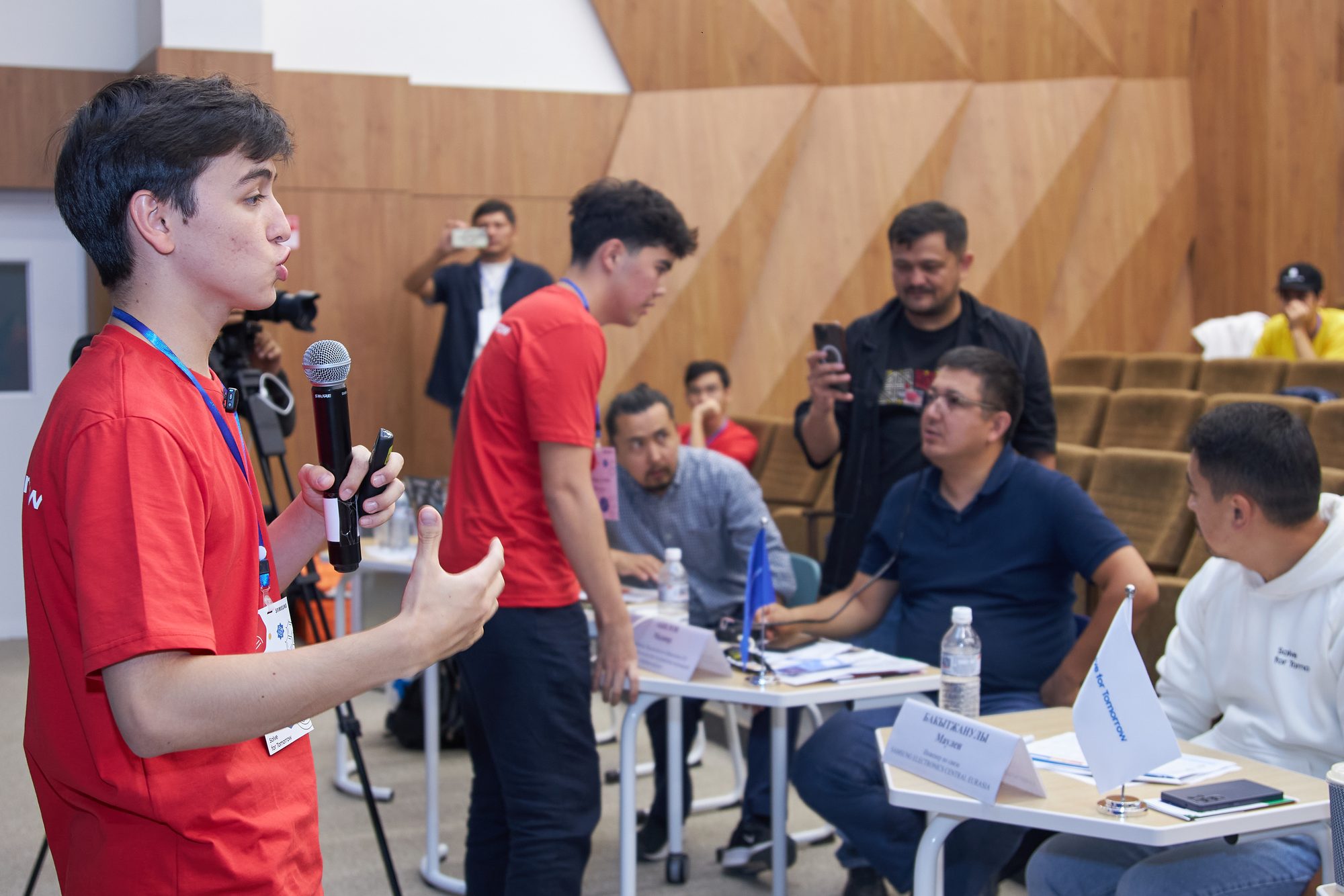
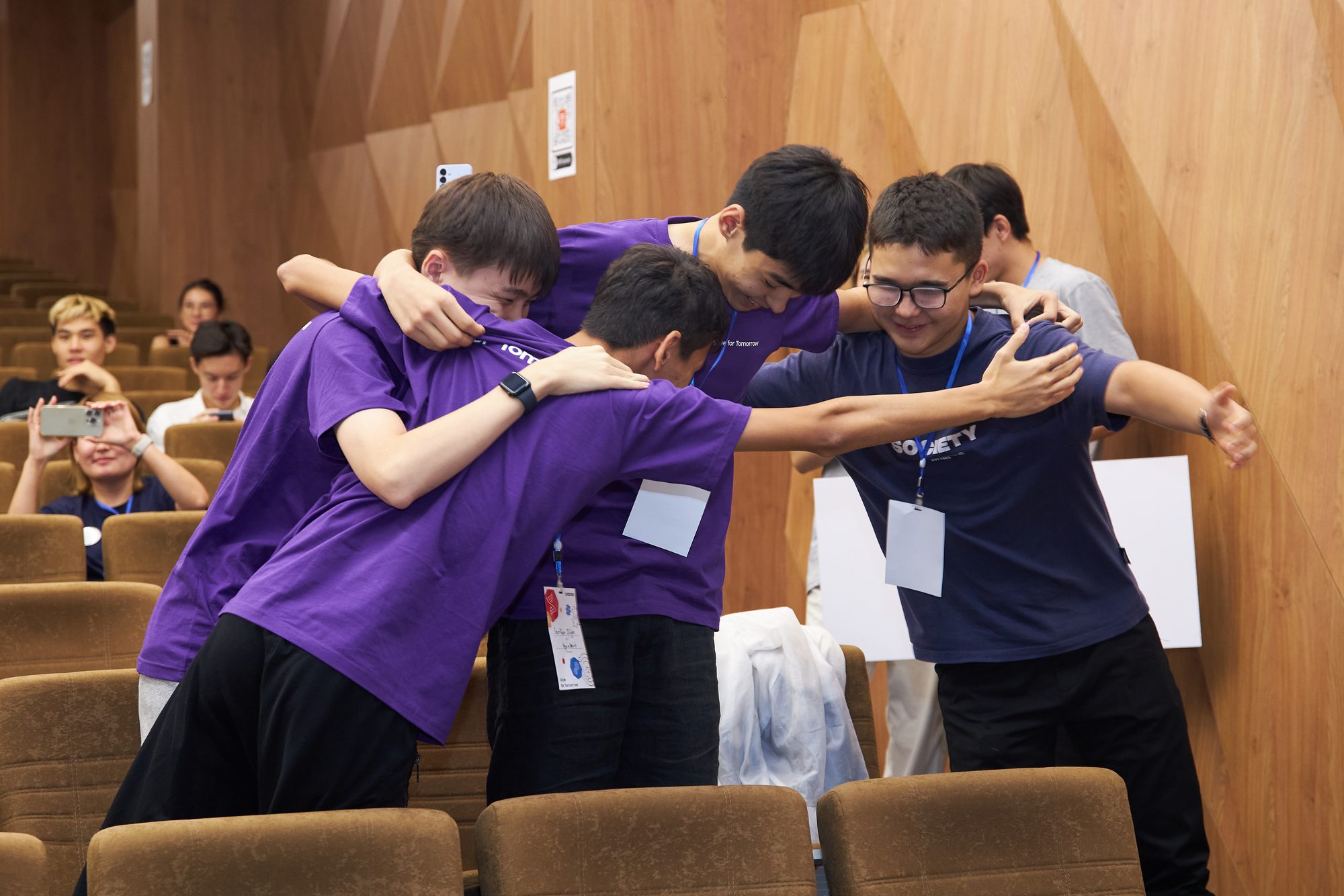
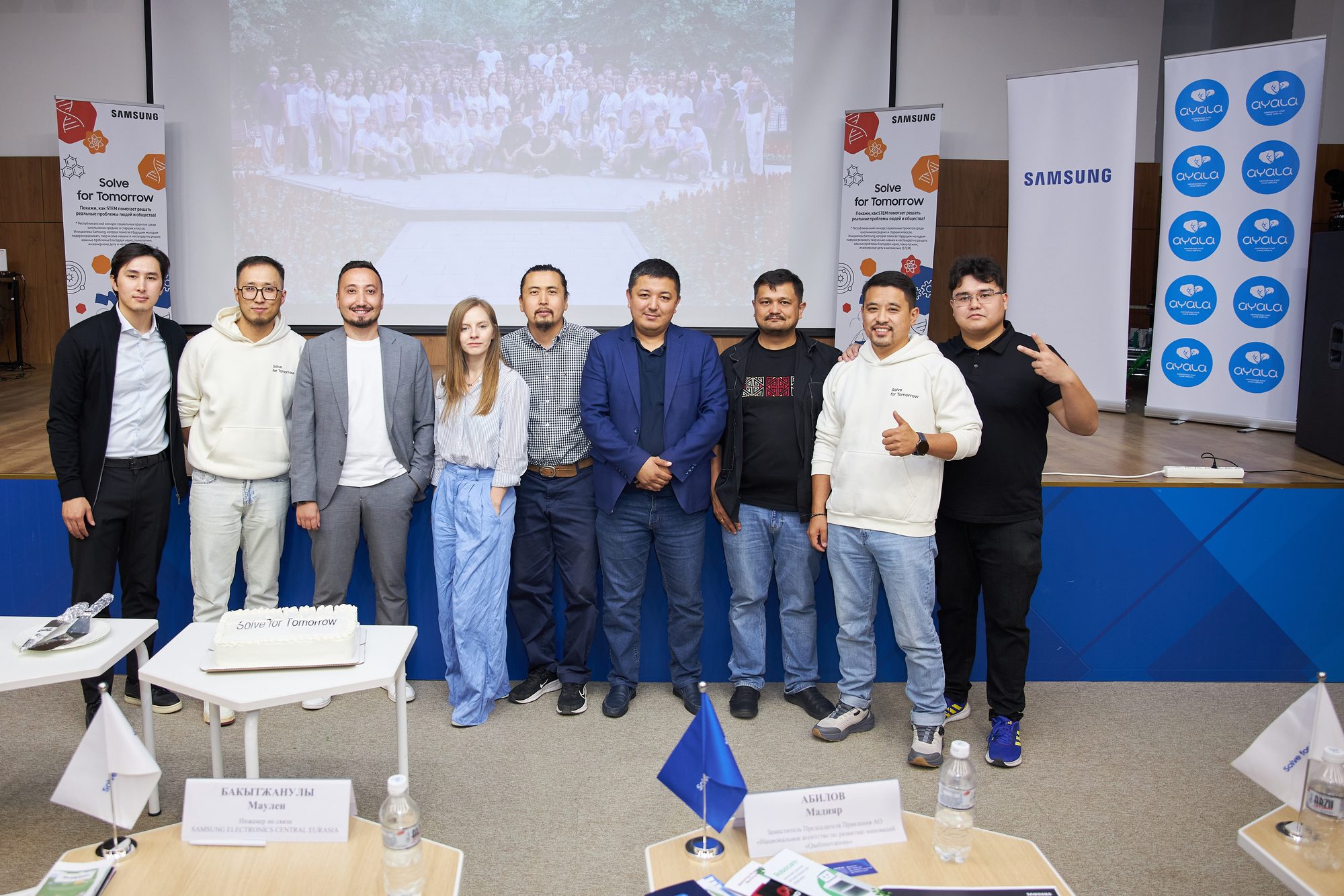
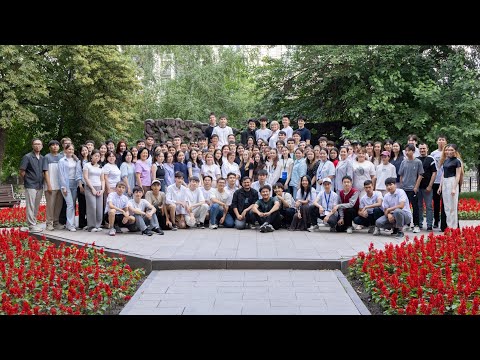
The fifth season broke the record — 992 innovative ideas. On 16 June an in-person semi-final mentoring session was held in Almaty: more than 100 school students from across the country, nine hours of design-thinking training, with travel and accommodation covered by Samsung Electronics and the Ayala Foundation as organising partner. Thirty-two teams reached the semi-final and ten the final.
SEASON 2025 · Samsung Solve for Tomorrow
Solve for Tomorrow 2025
A record season: 992 applications from across Kazakhstan
Season completed
⚠️ Machine translation, not yet reviewed by a native speaker. The Russian version of the page is the source.
Season photos
Season film
 ▶
▶How the Solve for Tomorrow 2025 final unfolded
Filmed by the programme organiser — the Samsung Kazakhstan channel.
Season results
992 — a record
applications
100+ students
mentoring session
32 teams
semi-final
10 teams
finalists
Season projects
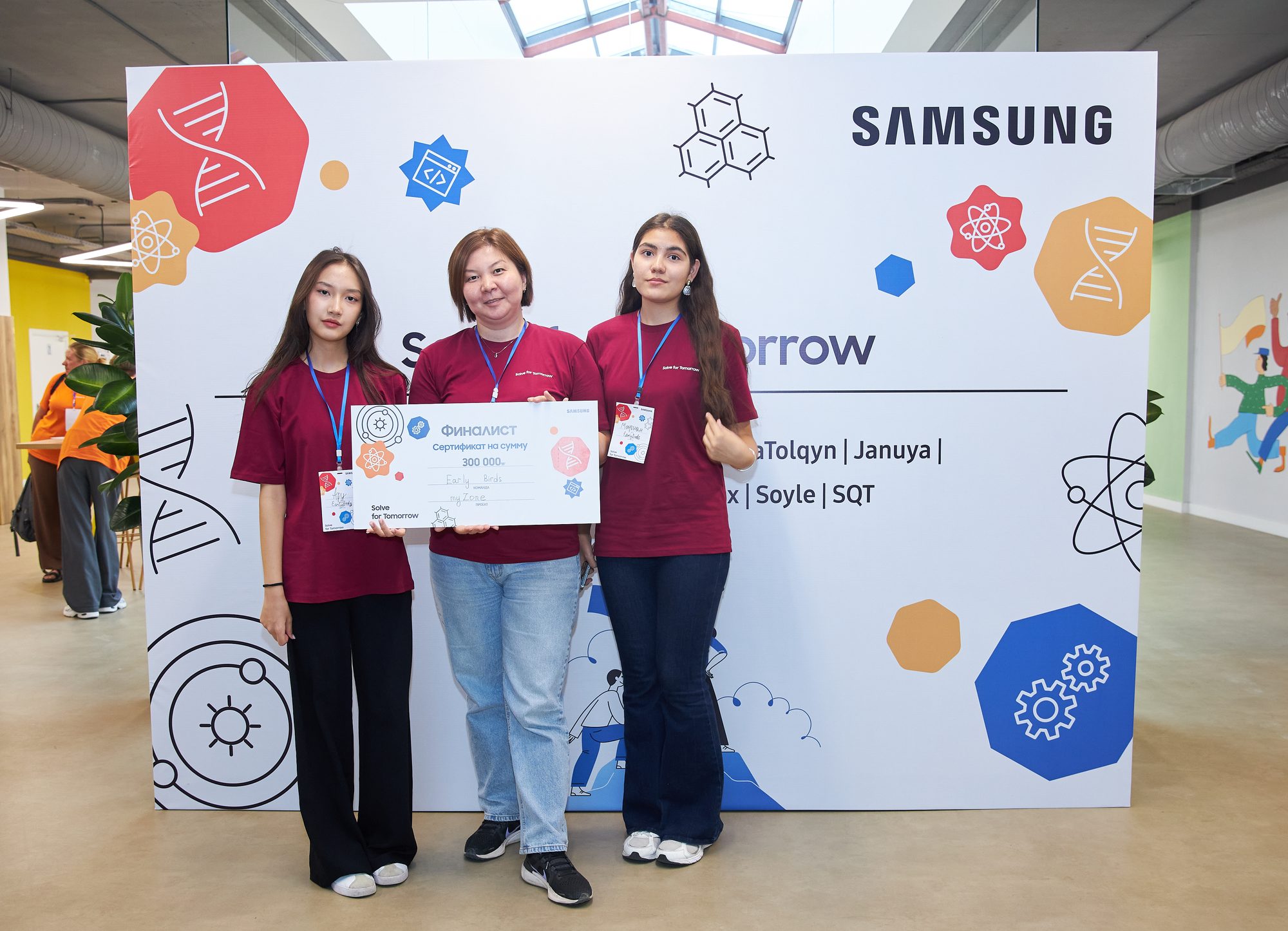
🥇1st place· EarlyBirds · Astana
myZone — early detection of breast cancer
A portable ultrasound device, myZoneUSG (an ultrasound sensor plus Arduino), paired with an AI platform: a questionnaire assesses risk, the device helps detect lumps, and the guides teach self-examination. The target is rural areas where mammography is out of reach. The prototype was validated on a breast phantom, with advice from oncologists and national centres.
▶ watch the pitch🥈2nd place· Nuanix · Kyzylorda
ReMotion — game-based rehabilitation after a stroke
A portable device with games that restore fine motor control in the hand and fingers: a gyroscope, a screen and feedback turn monotonous exercises into play, while a website tracks progress. Piloted at the inter-regional hospital in Kyzylorda and refined after feedback from a rehabilitation physician with 40 years of practice.
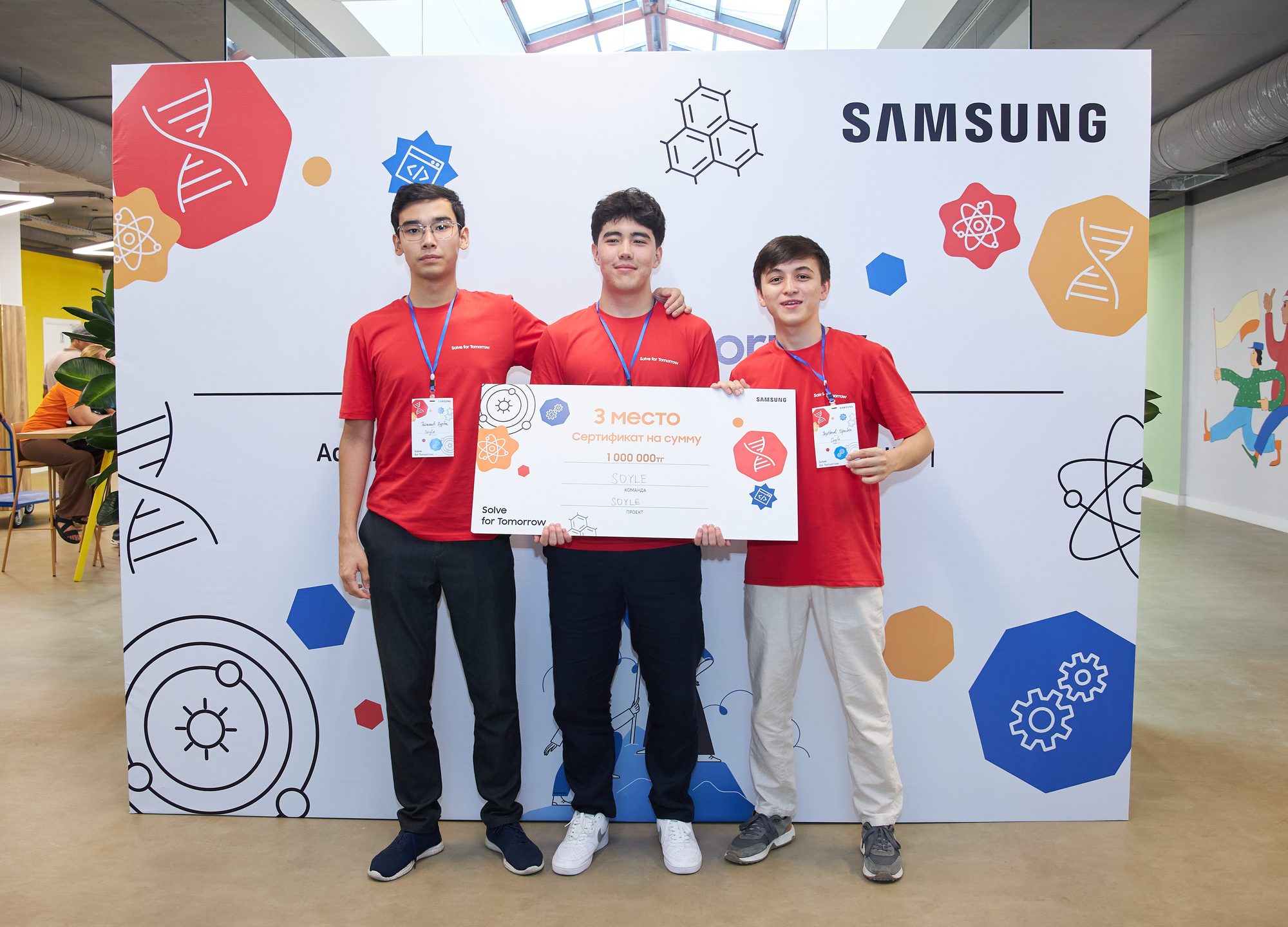
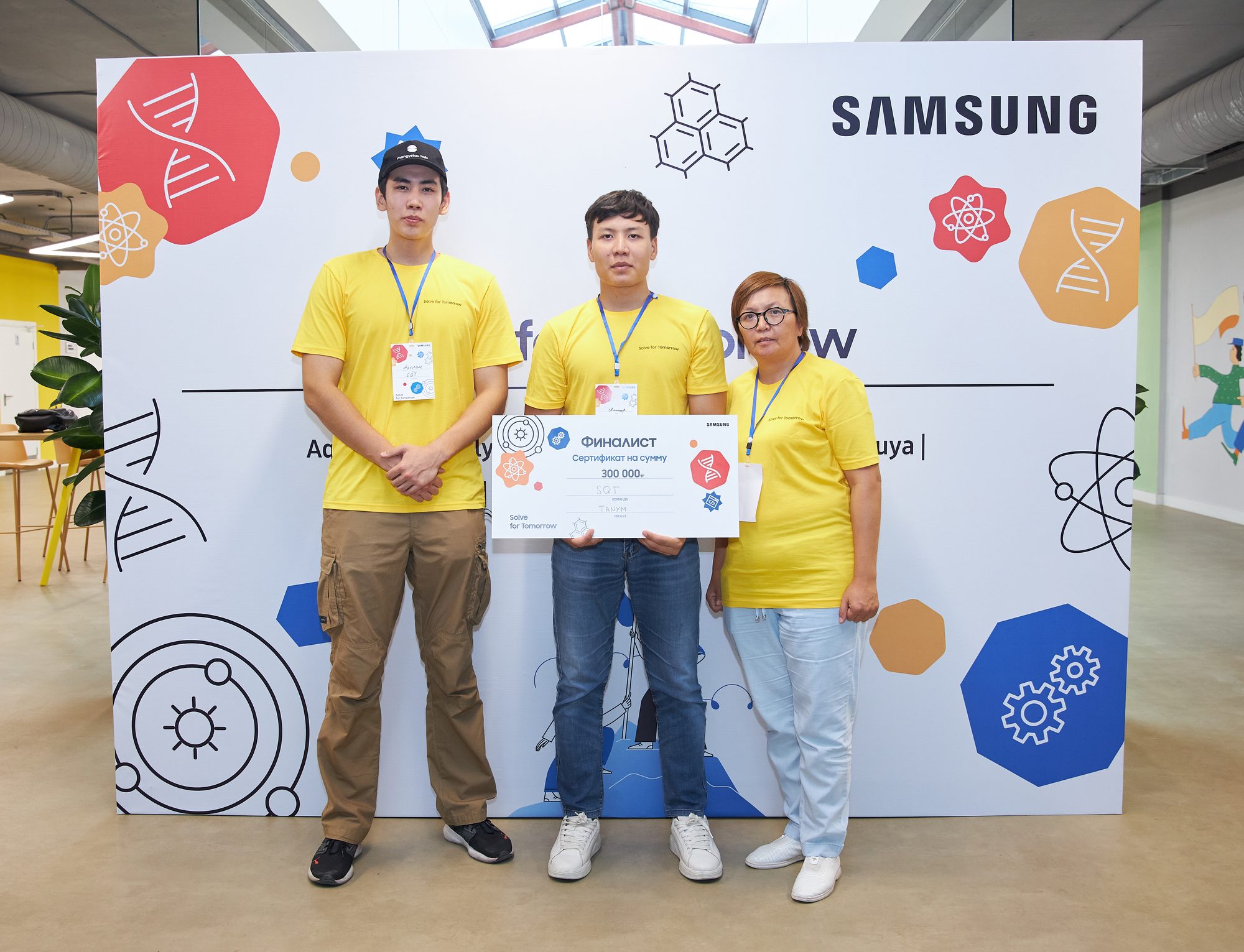
▶ watch the pitch🥉3rd place· SQT
Tanym — an interactive device for homework
An Arduino-based learning device: 100+ maths tasks, audio playback, a drawing board and a reward box that opens after a run of correct answers. A parent app adds tasks and shows the child's statistics.
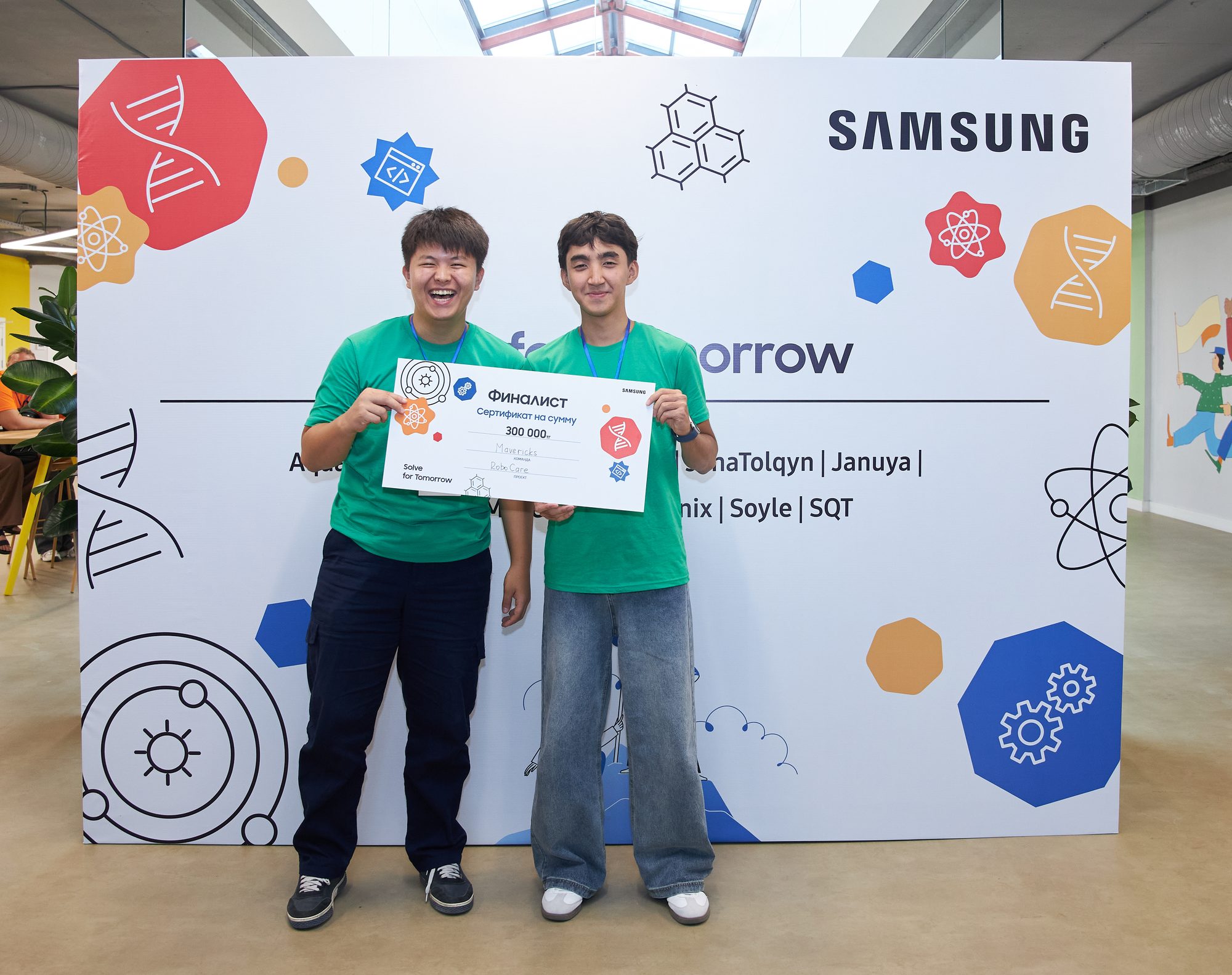
▶ watch the pitch🏅finalist· Mavericks · Shymkent
RoboCare — a courier robot for hospitals
An autonomous robot delivers medicines to wards: lidar and cameras for navigation, recipient recognition, UV self-disinfection of the compartment. It reduces contact between medical staff and infectious patients. Three prototypes, piloted at the Mediker clinic and Polyclinic No. 7.
▶ watch the pitch🏅finalist· JanaTolqyn · North Kazakhstan region
Sabaq — extracurricular learning for rural school students
An online platform with offline access: courses and lectures can be downloaded and studied without a stable internet connection. A points system, volunteer mentors and a parents' dashboard. Presented at a district meeting and at a regional teachers' seminar in the North Kazakhstan region.
🏅finalist· Januya
Poultry health monitoring (AI plus thermal imaging)
A thermal camera, a camera and a Raspberry Pi recognise signs of five poultry diseases (coccidiosis, fowl pox, Newcastle disease and others) from temperature and appearance — around the clock, with reports in an app. Built for smallholders with no vet nearby.
🏅finalist· Soile · Almaty
Soile AI — recognising impaired speech
A fine-tuned ASR model understands speech affected by cerebral palsy, stuttering and post-stroke conditions in five languages, Kazakh among them, and turns it into clear text. It adds video exercises based on speech-therapy methods and an AI assistant. Piloted with more than 100 users.
▶ watch the pitch🏅finalist· SOYLE
Smart glasses and a neck module for deaf users
The glasses turn the other person's speech into text on the display (the offline Vosk model), while the neck module recognises hand signs and speaks them aloud. Kazakh, Russian and English are supported, and it works without internet. Three weeks of pilot testing at the Mediker clinic.
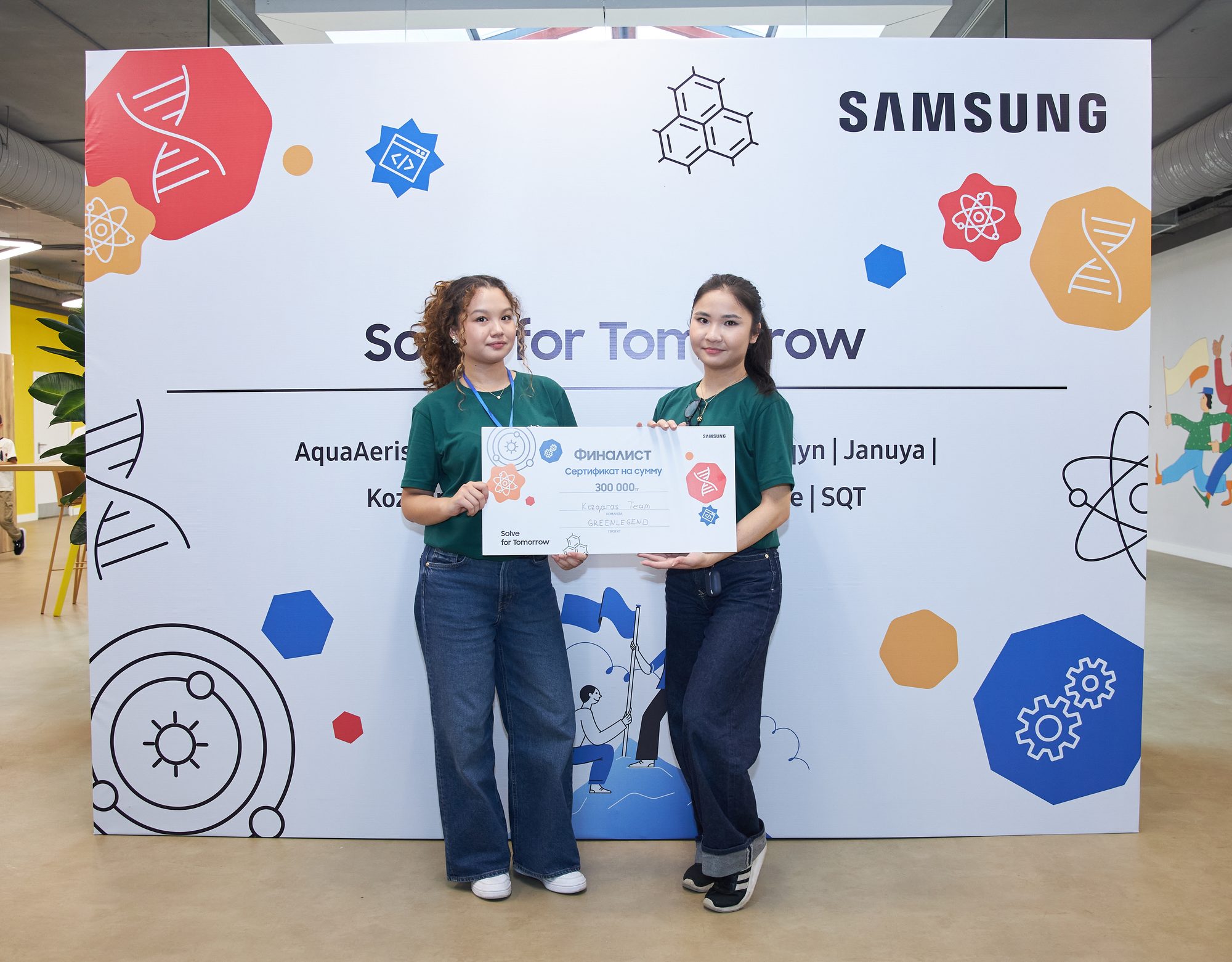
▶ watch the pitch🏅finalist· QozKaras · Taldykorgan
GreenLegend — a robot for reforestation
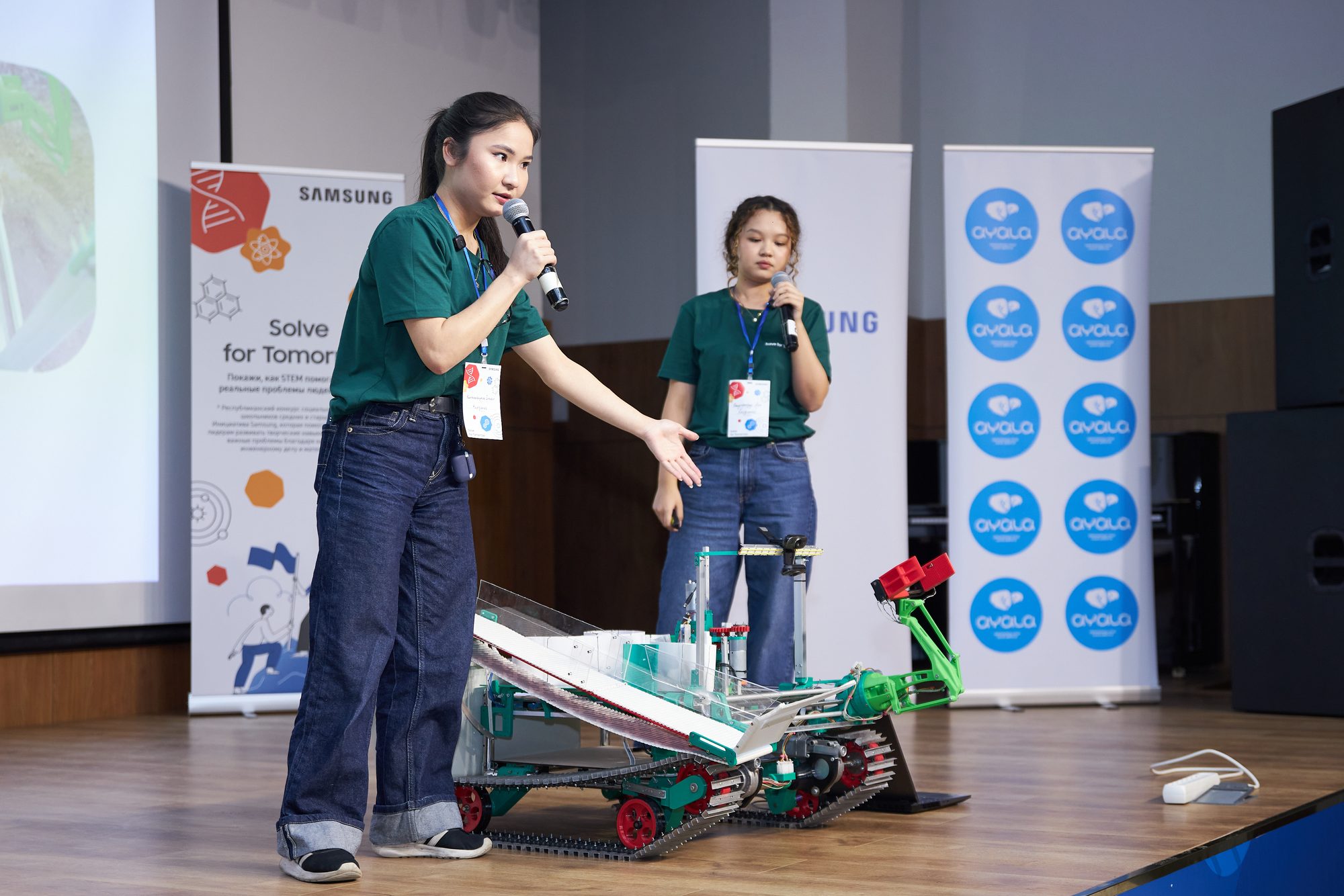
A tracked robot with two neural networks: it plants seedlings with an auger and a conveyor while recognising and collecting litter with a manipulator. Soil sensors feed data to an app that advises on care.
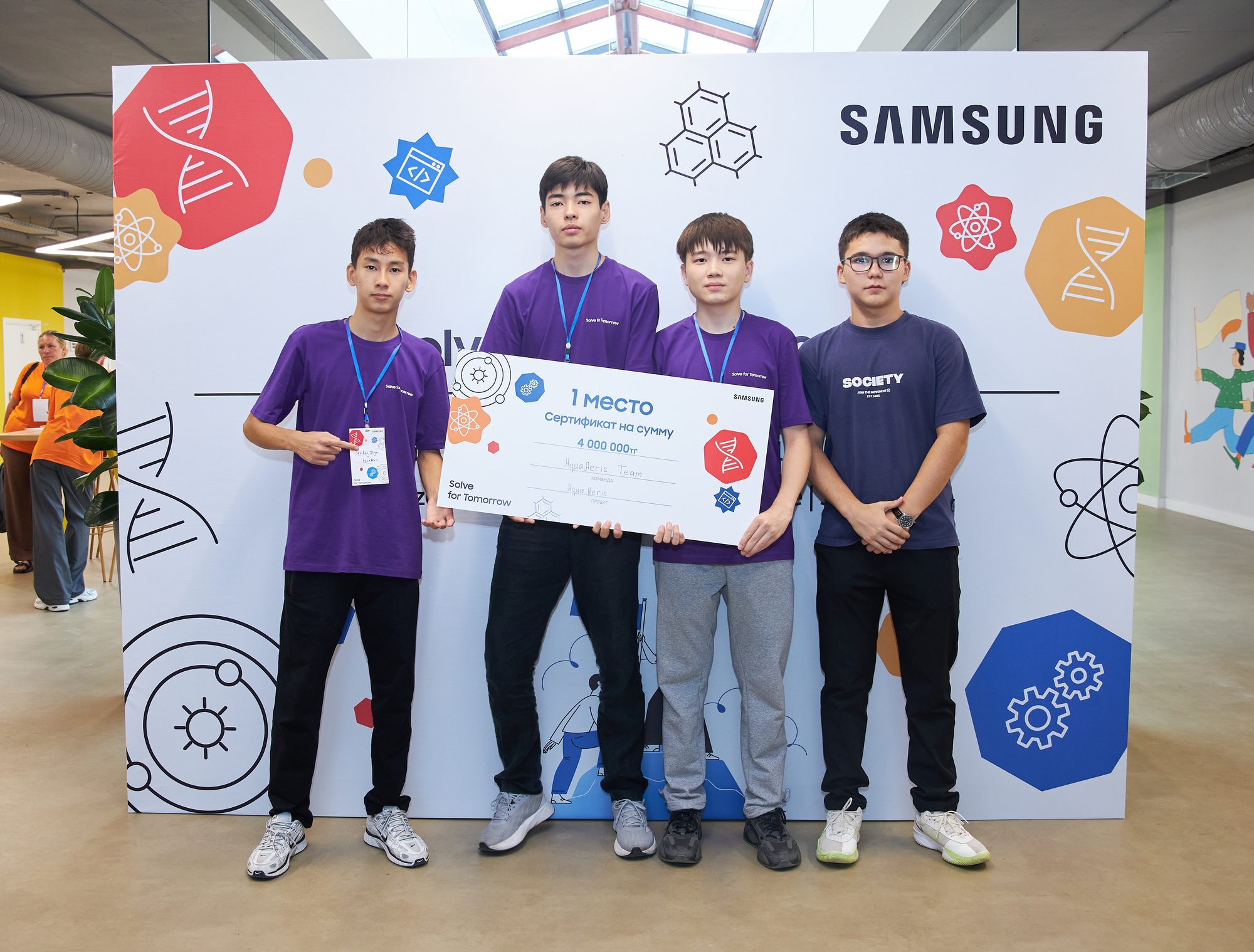
🏅finalist· AquaAeris
The AquaAeris team's project
🎥 Guest speaker recordings
Press and social media
- 2025-04-25 · Digital BusinessОбъявлен призовой фонд конкурса Samsung Solve for Tomorrow ↗
- 2025-06-19 · Samsung Newsroom КазахстанВ кругу единомышленников: как прошла ментор-сессия Solve For Tomorrow 2025 в Алматы ↗
- 2025-06-19 · BluescreenSamsung Solve For Tomorrow 2025: как 100 школьников из Казахстана прокачивали свои стартап-идеи ↗
- 2025-06-26 · Bluescreen«Надежда» на завтра: какие проекты Samsung Solve For Tomorrow уже сейчас меняют мир к лучшему ↗
- 2025-06-26 · Optimism.kz«Надежда» на завтра: какие проекты Samsung Solve For Tomorrow уже сейчас меняют мир к лучшему ↗
- 2025-06-27 · Samsung Newsroom Казахстан«Надежда» на завтра: какие проекты Samsung Solve For Tomorrow уже сейчас меняют мир к лучшему ↗
- 2025-08-21 · Фонд AYALAThe annual Solve for Tomorrow startup competition results ↗
- 2025-08-22 · Samsung Newsroom Казахстан[Инфографика] Samsung Solve for Tomorrow: 15 лет формирования будущего вместе с 2,8 млн участников из 68 стран ↗
- 2025-08-27 · Samsung Newsroom КазахстанФинал ежегодного конкурса стартапов Solve For Tomorrow 2025 прошёл в Астане ↗
- 2025-08-27 · Samsung Newsroom Казахстан (KZ)Астанада Solve For Tomorrow 2025 жыл сайынғы стартап байқауының финалы өтті ↗
- 2025-09-03 · НИШ КызылордаKyzylorda students among the country's top young innovators ↗
- 2025-09-03 · Inbusiness.kzФинал ежегодного конкурса стартапов Solve For Tomorrow 2025 прошёл в Астане ↗
- 2025-11-14 · Samsung Newsroom КазахстанЛожка мёда в бочке инноваций: как призёры Solve For Tomorrow переизобретают пчеловодство ↗
- 2025-12-22 · Региональная служба коммуникаций Акмолинской областиНИШ Кокшетау: ученики получили авторское право на уникальный ИИ-проект ↗
Social accounts of organisers and partners
- 2025-02-05 · Ayala FoundationThe foundation's 2024 results: a record 670 applications to Solve for Tomorrow ↗
- 2025-03-21 · TransforNATIONJanaArba — a wheelchair that climbs stairs ↗
- 2025-08-23 · TransforNATIONWaterTech, MedTech, EdTech, AgriTech: ideas from Kazakhstan's young engineers at the final ↗
- 2025-11-03 · TransforNATIONAquaAeris: school students from Oral extract water from air ↗